The process technology of lithium battery coating is a key link in the manufacturing process of lithium batteries, which directly affects the performance, safety, and production efficiency of lithium batteries. With the rapid development of the new energy industry, research and application of lithium battery coating technology are becoming increasingly in-depth. This article will compare and analyze several common lithium battery coating process technologies, in order to provide reference for lithium battery manufacturing enterprises.
Traditional wet coating process
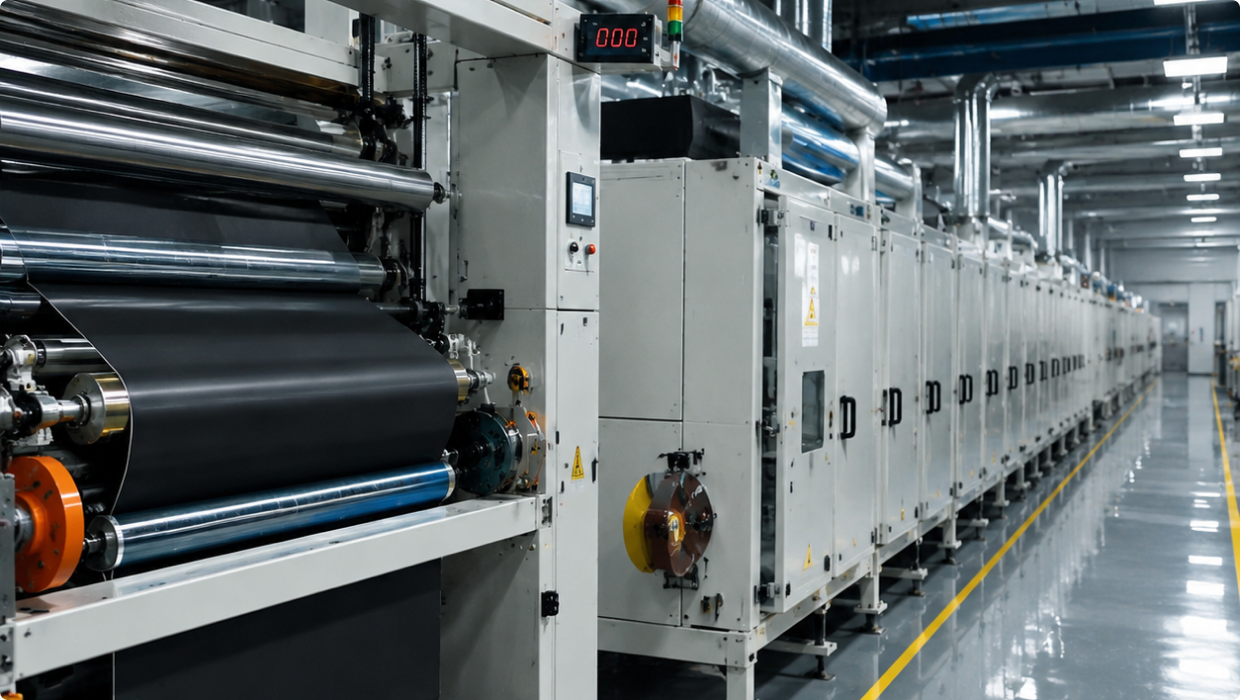
The traditional wet coating process is currently the most common coating method in lithium battery manufacturing. The basic principle is to mix the active material with a solvent and evenly coat it on a metal foil, and then dry it to form an electrode. The advantages of this process are mature technology, relatively simple operation, and low cost. However, it also has some shortcomings, such as long drying time, high energy consumption, and the impact of solvent evaporation on the environment.
Narrow slit extrusion coating process
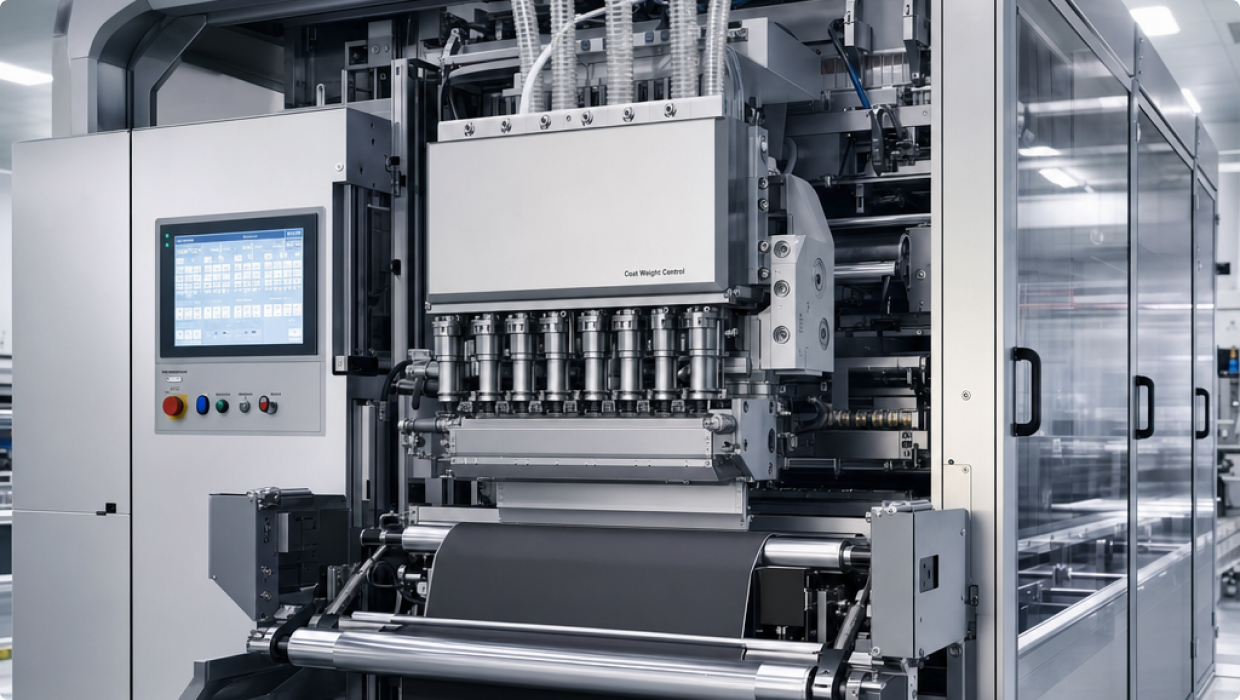
The narrow slit extrusion coating process is an advanced pre coating technology. It uses a specially designed extrusion die to extrude the slurry along a narrow slit and apply it onto a moving foil material. The uniformity and thickness are adjusted by the cavity structure of the extrusion die and the width of the slit. This process has the characteristics of high coating accuracy, wide applicability, high coating efficiency, and automated production. The coating and feeding device is completely enclosed, isolating external pollutants, and the utilization rate of the slurry is high, which can maintain the stability of the slurry properties. In addition, double-sided coating can be achieved, with simultaneous coating and drying on both sides of the foil material, resulting in high production efficiency and high utilization of production space. However, its equipment cost is high, requiring high technical knowledge from operators, high installation and operation requirements, and high maintenance costs for coating die heads.
Roller coating transfer coating process
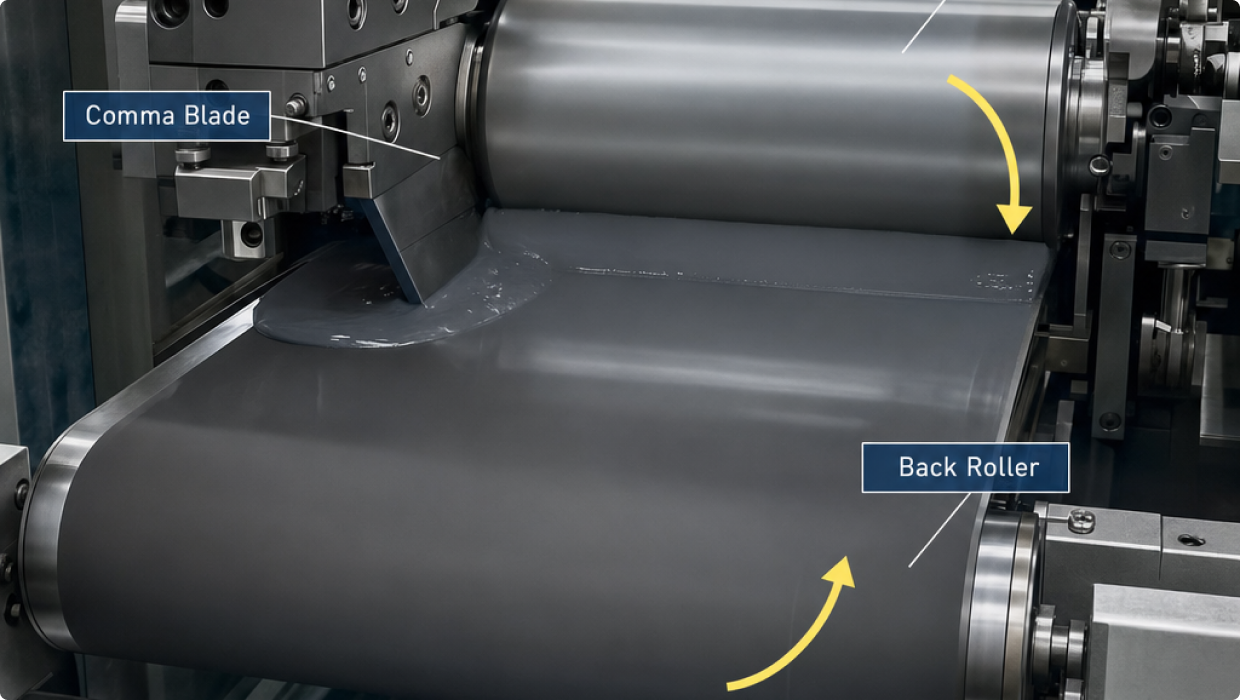
Roller coating transfer coating process is a commonly used coating method for consumer lithium-ion batteries. Its key structures include scraper, coating roller, and back roller. Its working principle is that the coating roller rotates to drive the slurry, and the transfer amount of the slurry is controlled by adjusting the gap between the comma scraper and the coating roller. The back roller and the coating roller rotate relative to each other to transfer the slurry to the moving foil material to form a coating. This process technology is relatively mature, with low requirements for slurry viscosity, easy adjustment of coating parameters, and no risk of material blockage. However, the slurry is completely exposed to the air, resulting in changes in the physical properties of the slurry, and the consistency of coating cannot be guaranteed. The material at the scraper mouth is easily absorbed and clumped to form particles, causing coating scratches, and in severe cases, the overall weight may be lighter.
Immersion coating process
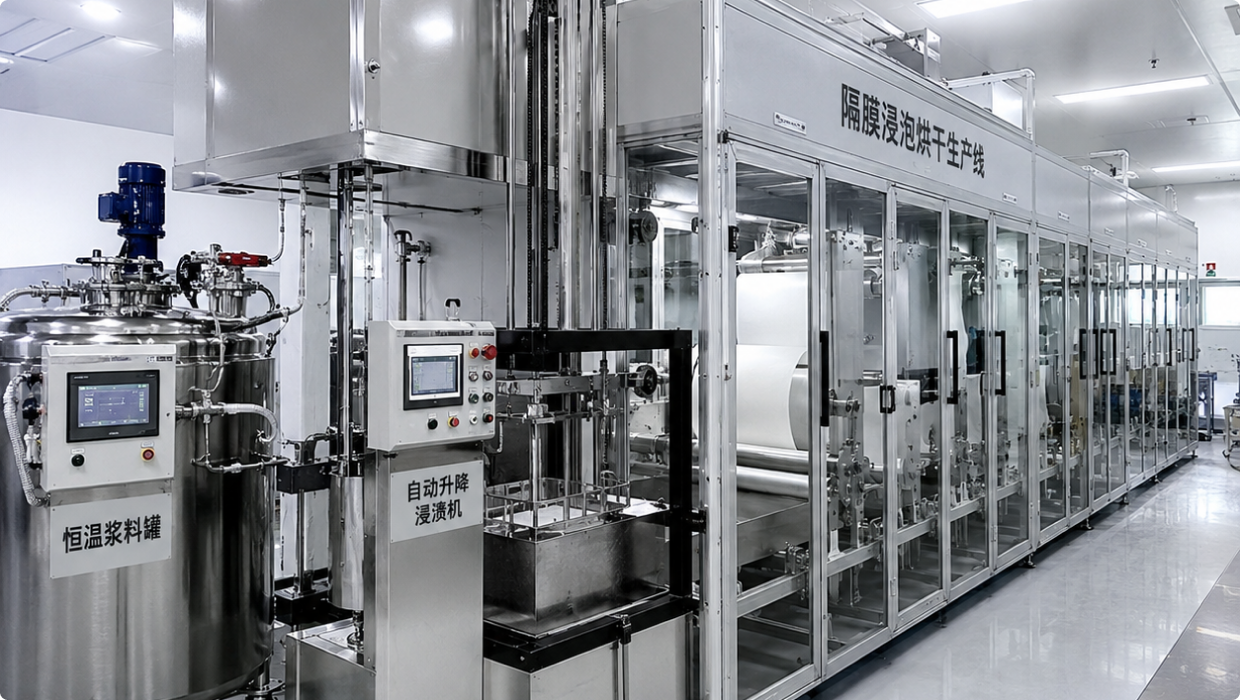
The basic principle of immersion coating process is to immerse the lithium-ion battery membrane in a certain concentration of slurry for a period of time, dry or remove it and then dry it to obtain a certain thickness of coating on the membrane surface. The principle and operation of this method are simple, but thickness control is relatively difficult.
Electrospinning process
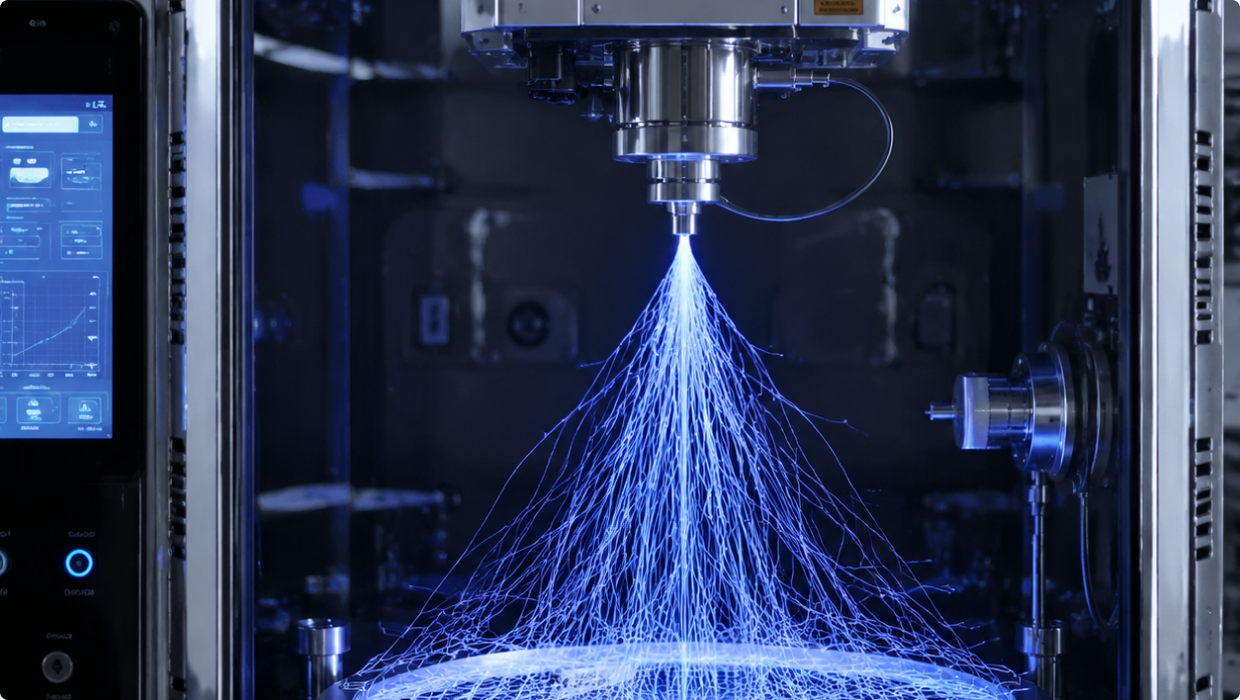
Electrospinning is the process of using electric field force to spray slurry onto a membrane, making the slurry charged. Under the action of electric field force, the slurry breaks through the surface tension and forms a nanowire jet onto the membrane. This process has a wide range of applicable materials, easy operation, large specific surface area, high porosity, fiber uniformity, and high yield. But its disadvantages are low crystallinity, poor orientation, and poor mechanical and mechanical properties, which require optimization through heat treatment, mixing, and other modification methods.
Coating accuracy
- The slit extrusion coating process has the highest coating accuracy and can accurately control the thickness and uniformity of the coating.
- The coating accuracy of the roll coating transfer coating process is relatively low, and uneven coating is prone to occur.
- The coating accuracy of traditional wet coating process is between the two.

Immersion coating process
- The slit extrusion coating process has the highest production efficiency and can achieve double-sided coating with fast coating speed.
- The production efficiency of traditional wet coating process is relatively low and the drying time is long.
- The production efficiency of roll coating transfer coating process is between the two.

Cost
- The equipment cost and maintenance cost of the narrow slit extrusion coating process are high.
- The cost of traditional wet coating process is relatively low.
- The cost of roll coating transfer coating process is between the two.

Environmental impact
- The traditional wet coating process generates solvent evaporation during the drying process, which has a certain impact on the environment.
- The narrow slit extrusion coating process and roll coating transfer coating process are relatively environmentally friendly.

Lankwitzer Coatings (Shanghai) Co., Ltd. is a professional lithium battery coating supplier. Lankwitzer enhances battery safety and performance through innovative R&D, and highlights its latest advancements in cutting-edge technological fields such as self-healing separator coatings.
UE 55-0500/0

UE 55-0500/7
UE 55-5566/0
UE 55-0500/7